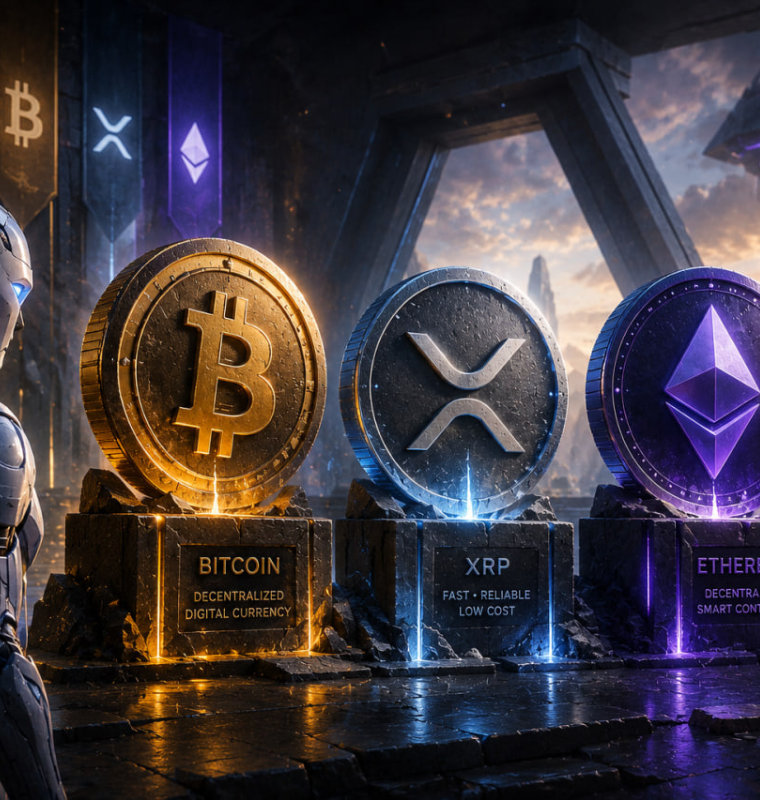
Bitcoin Holds Above $77,000 Despite Global Market Uncertainty and Geopolitical Tensions

Bitcoin Holds Above $77,000 Despite Global Market Uncertainty and Geopolitical Tensions
By
David Goldfarb
Last updated:
May 24, 2026
First Published:
May 24, 2026


Photo: Sherwood News
Bitcoin has once again demonstrated its ability to withstand periods of uncertainty, maintaining its position above the $77,000 level despite growing geopolitical tensions and ongoing concerns across global financial markets. The world's largest cryptocurrency continues to attract attention from investors seeking opportunities beyond traditional assets, reinforcing its status as one of the most closely watched instruments in modern finance.
The latest market environment presents a challenging backdrop for risk assets. International conflicts, economic uncertainty, inflation concerns, and shifting monetary policies have created volatility across stocks, commodities, and foreign exchange markets. Yet Bitcoin has managed to remain relatively stable, a development that many analysts view as an important signal regarding the asset's growing maturity.
Bitcoin Continues to Defy Expectations
For much of its history, Bitcoin was often criticized for extreme price swings and unpredictable market behavior. During earlier market cycles, major geopolitical events frequently triggered sharp corrections as investors moved toward traditional safe haven assets.
The current situation appears somewhat different. While volatility remains an inherent characteristic of cryptocurrency markets, Bitcoin's ability to hold above a significant psychological price level has attracted considerable attention among institutional and retail investors alike.
Many market participants expected heightened global uncertainty to create substantial downward pressure. Instead, Bitcoin has displayed resilience that suggests investor confidence may be stronger than previously anticipated.
Geopolitical Concerns Shape Investor Behavior
Global markets are currently influenced by multiple geopolitical developments occurring across different regions. Political instability, trade disputes, military tensions, and diplomatic challenges continue to create uncertainty regarding future economic growth.
Traditionally, such environments encourage investors to reduce exposure to risk assets and seek stability in government bonds, gold, or cash positions. However, Bitcoin's recent performance indicates that a growing number of investors may now view digital assets as an alternative means of preserving value during uncertain periods.
This evolving perception represents a significant shift in how cryptocurrencies are viewed within the broader financial system.
Institutional Participation Supports Market Stability
One factor contributing to Bitcoin's resilience is the increasing presence of institutional investors. Large financial firms, asset managers, hedge funds, and corporate entities have gradually expanded their involvement in digital asset markets over recent years.
Institutional participation often introduces greater liquidity and longer investment horizons. Unlike short term speculative traders, many professional investors evaluate Bitcoin through strategic frameworks focused on diversification, portfolio construction, and long term growth potential.
As institutional ownership increases, market behavior can become less dependent on short term speculation and more influenced by broader investment trends.
The Growing Narrative of Digital Value Storage
Bitcoin was originally introduced as a decentralized alternative to traditional monetary systems. Over time, another narrative emerged that positioned the asset as a potential store of value capable of preserving purchasing power during periods of economic uncertainty.
Supporters argue that Bitcoin's fixed supply distinguishes it from conventional currencies, which can be affected by monetary expansion and inflationary pressures. While debate continues regarding its effectiveness as a store of value, recent market performance has strengthened confidence among investors who support this thesis.
Holding above $77,000 during a challenging global environment has provided additional evidence for those who believe Bitcoin is gradually establishing a unique role within the financial ecosystem.
Market Participants Remain Focused on Monetary Policy
In addition to geopolitical developments, investors are closely monitoring decisions made by major central banks. Interest rates, inflation management strategies, and liquidity conditions continue to influence capital flows throughout global markets.
Changes in monetary policy often affect investor appetite for growth oriented assets, including cryptocurrencies. Lower interest rates generally encourage investment in higher risk opportunities, while tighter monetary conditions can reduce market liquidity.
Bitcoin's ability to maintain strength despite uncertainty surrounding future policy decisions suggests that demand remains robust across multiple investor segments.
Retail Investors Continue to Return
Retail participation remains an important component of cryptocurrency market activity. As Bitcoin maintains higher price levels, individual investors are once again demonstrating increased interest in digital assets.
Many retail participants view market resilience as a sign of underlying strength. Positive sentiment often attracts additional buyers, creating momentum that supports ongoing market activity.
The accessibility of cryptocurrency exchanges, mobile trading applications, and digital investment platforms has also made it easier for individuals to participate in the market than ever before.
As awareness grows, retail engagement continues to contribute to overall market liquidity and trading volume.
Competition With Traditional Safe Haven Assets
Bitcoin's performance during periods of uncertainty has naturally invited comparisons with traditional safe haven investments such as gold. Both assets are frequently discussed as alternatives to government issued currencies, although they differ significantly in terms of history, volatility, and market structure.
Gold has served as a store of value for centuries, while Bitcoin remains a relatively young asset class. Nevertheless, some investors increasingly allocate capital to both assets as part of broader diversification strategies.
The fact that Bitcoin has maintained strong price levels during geopolitical uncertainty suggests that a growing segment of the market is willing to consider digital assets alongside more traditional defensive investments.
Technical Strength Reinforces Market Confidence
From a market perspective, psychological price levels often influence investor behavior. Maintaining a position above $77,000 provides a visible demonstration of strength that can impact sentiment throughout the cryptocurrency ecosystem.
When significant support levels remain intact, traders frequently interpret the situation as evidence of sustained demand. This can encourage additional buying activity while reducing concerns about immediate downside risk.
Although technical indicators represent only one aspect of market analysis, they continue to play an important role in shaping investor expectations and trading decisions.
Challenges Still Remain
Despite recent strength, Bitcoin is not immune to future volatility. Cryptocurrency markets remain sensitive to regulatory developments, macroeconomic changes, technological challenges, and shifts in investor sentiment.
Unexpected geopolitical events could still affect market behavior, particularly if uncertainty intensifies significantly. Similarly, changes in monetary policy or broader economic conditions may influence demand for digital assets.
Investors therefore continue to balance optimism regarding Bitcoin's resilience with awareness of the risks associated with a rapidly evolving asset class.
What This Means for the Cryptocurrency Industry
Bitcoin's ability to remain above $77,000 during a period of global uncertainty carries implications beyond the asset itself. As the largest cryptocurrency by market capitalization, Bitcoin often serves as a benchmark for the broader digital asset sector.
Strong performance can boost confidence throughout the market, encouraging investment in blockchain infrastructure, decentralized applications, and emerging cryptocurrency projects. It also reinforces the perception that digital assets are becoming increasingly integrated into mainstream financial systems.
The current environment provides another opportunity for Bitcoin to demonstrate its relevance within an increasingly complex global economy.
Bitcoin's continued stability above $77,000 represents a notable achievement in a period defined by geopolitical tensions and economic uncertainty. While challenges remain, the asset's resilience reflects growing institutional participation, expanding investor confidence, and increasing recognition within global financial markets.
As digital assets continue to evolve, Bitcoin's performance during difficult market conditions may strengthen its reputation as a unique financial instrument capable of attracting attention from investors across the world. Whether viewed as a growth asset, a store of value, or a strategic portfolio component, Bitcoin remains at the center of the cryptocurrency industry's ongoing transformation.

Popular articles



Subscribe to unlock premium content
Imran Khan’s Economic Missteps Amid Political Chaos in Pakistan

The Philippines’ Digital Shift How Remittances and BPO Are Fueling Growth

Is the Era of Globalization Over or Just Evolving?
Imran Khan’s Economic Missteps Amid Political Chaos in Pakistan
The Philippines’ Digital Shift How Remittances and BPO Are Fueling Growth
Imran Khan’s Economic Missteps Amid Political Chaos in Pakistan