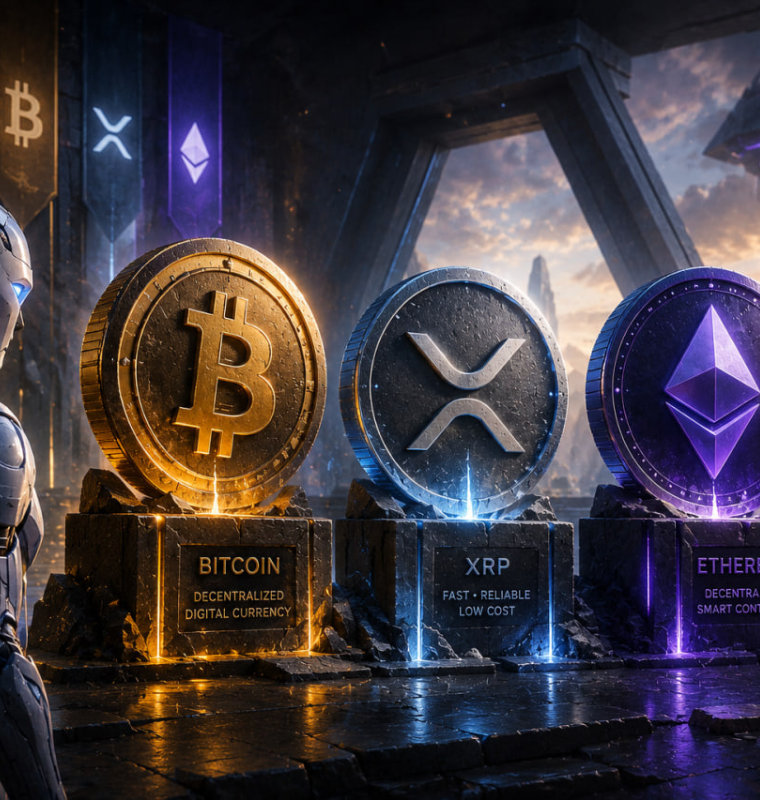
Industry Attention Shifts Toward Stablecoin Infrastructure and Tokenized Financial Services

Industry Attention Shifts Toward Stablecoin Infrastructure and Tokenized Financial Services
By
Rachel Steinberg
Last updated:
May 24, 2026
First Published:
May 24, 2026


Photo: Seeking Alpha
The cryptocurrency industry is entering a new phase of development where attention is increasingly focused on practical financial infrastructure rather than speculative trading alone. Among the most significant trends emerging in 2026 is the rapid growth of stablecoin infrastructure and tokenized financial services. As investors, institutions, technology companies, and regulators continue to explore the future of digital finance, these sectors are becoming central to conversations about how blockchain technology can transform global financial systems.
For years, much of the public discussion surrounding cryptocurrency revolved around volatile digital assets and dramatic market movements. Today, however, the focus is gradually shifting toward solutions that offer real world utility, efficiency, and accessibility. Stablecoins and tokenized financial products are at the forefront of this transition, attracting increasing investment and industry attention.
The Rise of Stablecoins as Financial Infrastructure
Stablecoins have become one of the most important innovations within the digital asset ecosystem. Unlike traditional cryptocurrencies that often experience significant price fluctuations, stablecoins are designed to maintain a relatively stable value by being linked to reserve assets such as national currencies.
This stability makes them particularly useful for payments, settlements, remittances, savings, and business transactions. As a result, stablecoins are increasingly viewed not merely as cryptocurrency products but as foundational components of modern financial infrastructure.
Financial institutions and technology companies are recognizing that stablecoins can provide faster transaction processing, lower costs, and greater accessibility compared to certain traditional payment systems.
Why the Industry Is Paying Attention
The growing interest in stablecoin infrastructure stems from the practical benefits these digital assets offer. Businesses operating across multiple countries often face delays, fees, and operational challenges when moving money through traditional banking networks.
Stablecoins present an alternative that allows near instant value transfer on blockchain networks. This capability is particularly attractive in a global economy where speed and efficiency have become increasingly important.
As adoption expands, stablecoins are evolving from niche digital assets into critical tools for commerce, financial services, and international payments.
Tokenization Emerges as a Major Growth Sector
Alongside stablecoins, tokenization has become one of the most discussed topics within blockchain innovation. Tokenization refers to the process of representing traditional financial assets digitally on blockchain networks.
Assets such as stocks, bonds, real estate holdings, investment funds, commodities, and other financial instruments can potentially be converted into digital tokens that exist on decentralized networks.
This process has the potential to improve efficiency, increase transparency, reduce administrative costs, and expand access to investment opportunities. As a result, tokenization is attracting interest from both established financial institutions and emerging blockchain companies.
Traditional Finance Begins to Embrace Blockchain Solutions
One of the most notable developments in recent years has been the growing willingness of traditional financial organizations to engage with blockchain technology. Banks, asset managers, investment firms, and payment providers are increasingly exploring how tokenized financial services can improve existing operations.
Rather than viewing blockchain as a disruptive threat, many institutions now see it as a technological tool capable of enhancing efficiency and reducing friction within financial markets.
This shift in perspective has contributed significantly to the momentum surrounding tokenized finance and stablecoin infrastructure.
Increased Institutional Participation Accelerates Growth
Institutional involvement often serves as a catalyst for industry expansion. As major financial organizations allocate resources toward blockchain initiatives, confidence within the broader market tends to increase.
Large institutions possess the capital, expertise, and regulatory experience necessary to develop sophisticated financial products capable of serving millions of users. Their participation also helps validate emerging technologies in the eyes of regulators, businesses, and investors.
The growing focus on stablecoin networks and tokenized assets reflects a belief that these technologies may become essential components of future financial ecosystems.
Stablecoins Are Expanding Beyond Cryptocurrency Trading
Historically, stablecoins were primarily used within cryptocurrency exchanges as a convenient trading tool. Today, their role is expanding significantly beyond digital asset markets.
Businesses are exploring stablecoins for international payments, payroll systems, supplier settlements, and treasury management. Consumers are using them for savings, peer to peer transfers, and cross border transactions.
As practical applications continue to grow, stablecoins are becoming increasingly integrated into everyday financial activities. This transition represents an important step toward broader blockchain adoption.
Tokenized Assets Could Transform Investment Access
One of the most promising aspects of tokenization is its potential to democratize access to financial markets. Traditional investment opportunities often involve high minimum requirements, geographic restrictions, and administrative complexities.
Tokenized assets could potentially reduce many of these barriers by enabling fractional ownership and more efficient transaction processes. Investors may gain access to opportunities that were previously available only to large institutions or high net worth individuals.
This increased accessibility could reshape how people participate in global financial markets over the coming decades.
Regulatory Discussions Continue to Evolve
As stablecoins and tokenized financial services grow, regulatory frameworks are becoming increasingly important. Policymakers around the world are working to establish guidelines that encourage innovation while protecting consumers and maintaining financial stability.
Clear regulatory structures are often viewed as essential for long term industry growth. Financial institutions generally require legal certainty before committing significant resources to emerging technologies.
The progress of regulatory discussions will likely play a major role in determining how quickly stablecoin infrastructure and tokenized finance continue to expand.
Technology Improvements Support Adoption
Advancements in blockchain technology have also contributed to the increasing popularity of stablecoins and tokenized services. Modern blockchain networks offer improved scalability, lower transaction costs, enhanced security, and better user experiences compared to earlier generations of digital infrastructure.
These improvements make blockchain based financial services more practical for large scale adoption. As technology continues to evolve, the advantages of digital financial infrastructure become increasingly attractive to businesses and consumers alike.
The combination of technical innovation and growing market demand is creating favorable conditions for continued expansion.
The Future of Digital Finance Is Taking Shape
Many industry leaders believe that stablecoins and tokenized financial services represent the next stage in the evolution of global finance. Rather than replacing traditional systems entirely, these technologies may gradually integrate with existing financial infrastructure to create more efficient and accessible solutions.
The transition is expected to occur over many years, but the foundations are already being established. Investments in blockchain infrastructure, regulatory development, and financial innovation continue to accelerate across multiple regions.
As adoption increases, stablecoins and tokenized assets may become as familiar to consumers as digital banking and electronic payments are today.
Challenges Still Need to Be Addressed
Despite strong momentum, several challenges remain. Regulatory uncertainty, interoperability concerns, cybersecurity risks, and technological complexity continue to present obstacles for widespread adoption.
Industry participants must also address issues related to governance, compliance, privacy, and user education. Success will depend on creating systems that balance innovation with security and reliability.
However, many experts believe these challenges are manageable and represent normal growing pains for an emerging technological sector.
The cryptocurrency industry's growing focus on stablecoin infrastructure and tokenized financial services reflects a broader shift toward practical utility and real world adoption. Rather than concentrating solely on speculative assets, businesses and institutions are increasingly investing in blockchain solutions capable of transforming how money moves and how financial assets are managed.
Stablecoins are becoming critical components of digital payment systems, while tokenized financial products are opening new possibilities for investment and asset management. Together, these innovations are helping shape a future where blockchain technology plays a central role in global finance.
As development continues and adoption expands, stablecoin infrastructure and tokenized services may become some of the most influential innovations in the next chapter of the digital asset industry.

Popular articles



Subscribe to unlock premium content
Imran Khan’s Economic Missteps Amid Political Chaos in Pakistan

The Philippines’ Digital Shift How Remittances and BPO Are Fueling Growth

Is the Era of Globalization Over or Just Evolving?
Imran Khan’s Economic Missteps Amid Political Chaos in Pakistan
The Philippines’ Digital Shift How Remittances and BPO Are Fueling Growth
Imran Khan’s Economic Missteps Amid Political Chaos in Pakistan