
Bitcoin Slides Near 61K as Liquidations Shake Crypto Markets
By
Alina Sinclair
Last updated:
June 4, 2026
First Published:
June 4, 2026

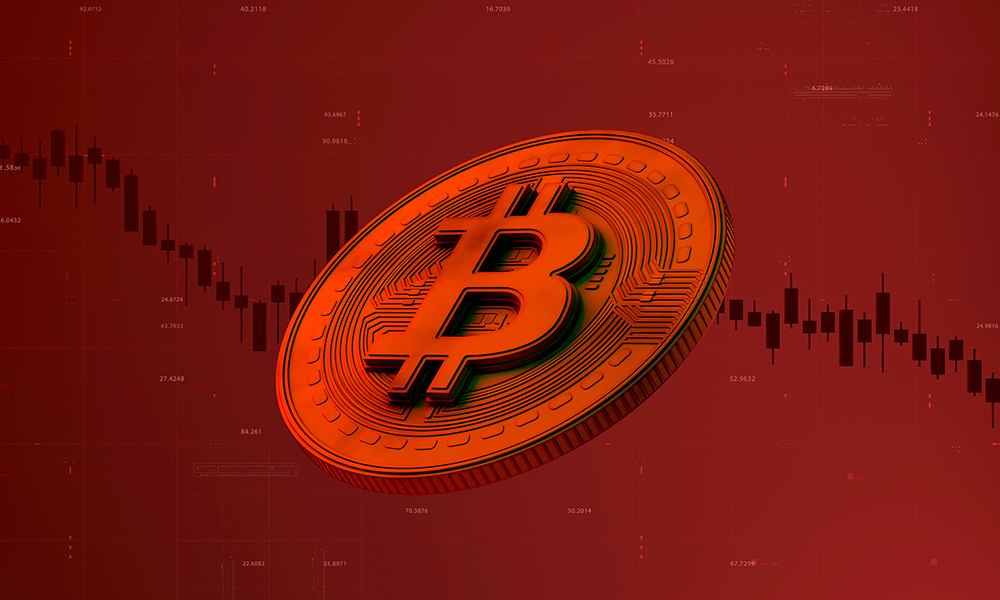
Sudden downside pressure hits Bitcoin
Bitcoin experienced a sharp decline toward the 61000 dollar zone as aggressive leverage across derivatives markets unwound in a rapid sequence. The move followed a period of elevated optimism that had pushed positioning to stretched levels, leaving traders exposed to abrupt price corrections. Selling pressure accelerated once key support zones failed to hold, triggering automated liquidations across multiple exchanges and amplifying volatility across the broader crypto ecosystem.
Derivatives liquidation cascade intensifies losses
A significant wave of forced liquidations played a central role in deepening the market downturn. As Bitcoin breached short term support levels, leveraged long positions were closed automatically, adding further selling pressure into already weakening order books. This chain reaction created a feedback loop where falling prices triggered more liquidations, which in turn pushed prices lower in a short span of trading activity.
Market sentiment shifts rapidly from optimism to caution
Sentiment across the crypto market shifted quickly as traders moved from bullish positioning to defensive strategies. Risk appetite declined noticeably, with participants reducing exposure to high volatility assets. This transition reflected growing concern that the market had become overheated in the short term, particularly after extended periods of upward momentum in leading digital assets.
Ethereum and major altcoins follow Bitcoin lower
Ethereum and several large cap altcoins mirrored Bitcoin’s decline, experiencing correlated losses as capital flowed out of risk assets. The synchronized movement reinforced the view that the downturn was primarily driven by broader market structure rather than isolated asset specific weakness. Liquidity thinning during the selloff further exaggerated price swings across multiple tokens.
ETF flows show signs of weakening demand
Institutional demand, which had previously supported price stability, showed signs of slowing as exchange traded fund inflows softened. Some funds experienced net outflows during the same period of market stress, reducing a key source of steady buying pressure. Analysts noted that the cooling of institutional participation may have contributed to the market’s inability to absorb large sell orders efficiently.
Liquidity conditions tighten across exchanges
Order book depth decreased as market makers widened spreads in response to heightened volatility. This reduction in available liquidity made price movements more pronounced, allowing relatively large trades to impact market levels more significantly than during stable conditions. Thin liquidity combined with leveraged trading amplified the severity of the price swing.
Regulatory attention adds to market uncertainty
Ongoing scrutiny of crypto derivatives and perpetual futures markets has added an additional layer of uncertainty for participants. Concerns around systemic exposure to leverage in digital asset markets have been raised by regulators and industry leaders alike. This environment has encouraged more cautious positioning among both retail and institutional traders.
Altcoin market experiences uneven pressure
While major altcoins followed the broader decline, mid cap and lower liquidity tokens experienced more uneven and sometimes sharper declines. These assets tend to react more strongly during liquidity contractions, as fewer buyers are available to absorb sell pressure. As a result, price dispersion across the altcoin market widened significantly during the downturn.
Volatility expected to remain elevated in short term
Market analysts anticipate that volatility will remain elevated as traders reassess positioning and leverage levels reset. Periods of rapid liquidation often take time to stabilize as confidence rebuilds and liquidity gradually returns. In the near term, price action is expected to remain sensitive to macro signals and derivatives market positioning.
Longer term outlook still tied to institutional participation
Despite the short term correction, the broader market outlook continues to depend heavily on sustained institutional participation and product expansion within regulated investment channels. The durability of demand from exchange traded funds and large asset managers remains a key factor in determining whether the current pullback evolves into a longer consolidation phase or a renewed upward trend.

Popular articles



Subscribe to unlock premium content
Imran Khan’s Economic Missteps Amid Political Chaos in Pakistan

The Philippines’ Digital Shift How Remittances and BPO Are Fueling Growth

Is the Era of Globalization Over or Just Evolving?
Imran Khan’s Economic Missteps Amid Political Chaos in Pakistan
The Philippines’ Digital Shift How Remittances and BPO Are Fueling Growth
Imran Khan’s Economic Missteps Amid Political Chaos in Pakistan