
Canaan Expands Home Bitcoin Mining Push as Demand for Retail Mining Hardware Resurges

Canaan Expands Home Bitcoin Mining Push as Demand for Retail Mining Hardware Resurges
By
Rachel Steinberg
Last updated:
May 18, 2026
First Published:
May 18, 2026

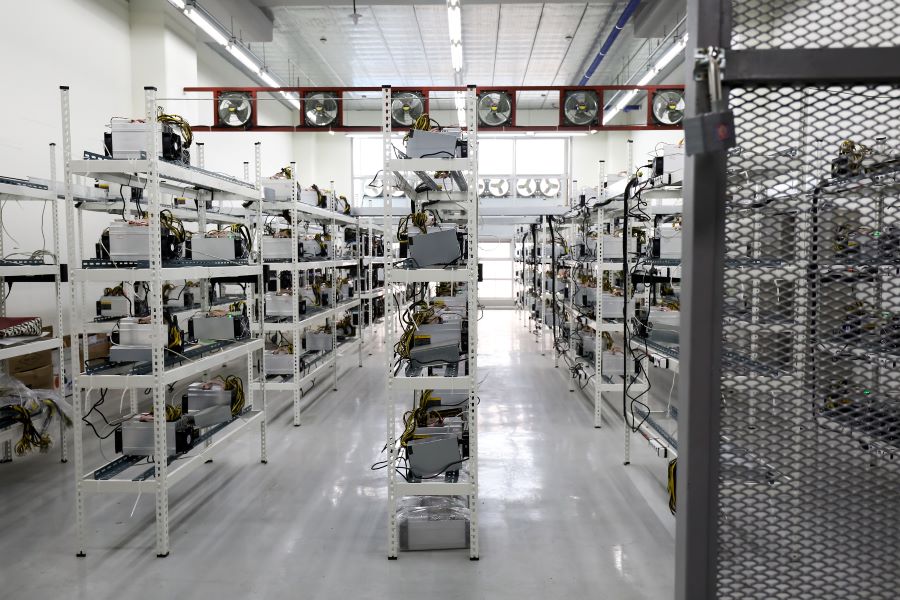
Photo: Bamboo Works
A Revival of Interest in Home Bitcoin Mining
The cryptocurrency mining industry is experiencing a renewed wave of interest in consumer level hardware as Canaan expands its retail focused Bitcoin mining strategy. The company, known for manufacturing specialized mining equipment, is now pushing deeper into the home mining segment with devices designed for individual users rather than large scale industrial operations.
This development signals a notable shift in the structure of the mining ecosystem. After years of dominance by industrial mining farms with massive capital and energy resources, there is growing attention toward smaller scale participation enabled by more efficient and accessible hardware.
Canaan’s latest move suggests that the company sees long term potential in decentralized mining participation, especially as technological improvements make home mining more viable than in previous cycles.
Why Home Mining Is Gaining Attention Again
Home Bitcoin mining had largely declined in popularity after industrial mining operations became significantly more efficient and profitable. Large mining farms benefited from economies of scale, cheaper electricity agreements, and advanced cooling infrastructure, making it difficult for individual miners to compete.
However recent advancements in mining hardware efficiency and energy optimization have reopened the door for retail participation. New generation devices consume less electricity while delivering improved hash performance, making small scale mining more realistic for hobbyists and crypto enthusiasts.
Additionally rising interest in decentralization has encouraged some users to return to home mining as a way to directly support the Bitcoin network rather than relying on large centralized mining pools.
Canaan’s Strategy in the Retail Mining Market
Canaan’s expansion into home mining devices reflects a broader strategy to diversify its customer base beyond institutional mining farms. By targeting individual users the company is tapping into a growing niche market that values accessibility simplicity and lower entry costs.
The new generation of devices focuses on compact design quieter operation and improved energy efficiency. Some models are also being marketed as dual purpose units capable of repurposing heat generated during mining for household use such as space heating.
This approach attempts to address one of the most common criticisms of Bitcoin mining which is its energy consumption. By integrating useful heat output into home environments manufacturers aim to improve overall efficiency perception and practical value.
The Economics of Small Scale Bitcoin Mining
Despite technological improvements home mining remains highly dependent on electricity costs hardware efficiency and Bitcoin market prices. Profitability can vary significantly depending on regional energy rates and network difficulty levels.
In many regions high electricity costs still make it difficult for individual miners to generate consistent profits. However in areas with lower energy prices or renewable energy access home mining can still offer modest returns or break even performance.
For many users the motivation is not purely financial. Some participants view home mining as a way to accumulate Bitcoin gradually while contributing to network decentralization and gaining hands on experience with blockchain infrastructure.
Environmental Considerations and Energy Innovation
Energy consumption has long been one of the most debated topics in the Bitcoin mining industry. Industrial scale mining operations have faced criticism for their environmental impact especially in regions reliant on fossil fuels.
Home mining devices are increasingly being designed with energy efficiency in mind. Manufacturers are focusing on reducing watt per terahash ratios and improving overall computational efficiency to lower electricity requirements.
Some emerging models even explore integration with renewable energy sources such as solar or wind power. This approach could help reduce environmental concerns while making small scale mining more sustainable over time.
Canaan’s expansion into this space reflects an industry wide effort to address environmental scrutiny while maintaining network security and decentralization.
Decentralization Narrative Strengthens
One of the key arguments in favor of home mining is its contribution to Bitcoin network decentralization. When mining power is distributed among many individual participants rather than concentrated in a few large entities the network becomes more resistant to control and censorship.
Industrial mining concentration has been a recurring concern within the crypto community. Large mining pools and corporate mining farms can potentially influence network dynamics if they accumulate too much computational power.
By encouraging broader participation through home mining devices companies like Canaan are reinforcing the original vision of a more distributed and open network infrastructure.
Competition in Mining Hardware Market Intensifies
The mining hardware industry is becoming increasingly competitive as manufacturers race to develop more efficient chips and more accessible products. Companies are not only competing on performance but also on energy efficiency noise reduction and user experience.
Canaan faces competition from other major hardware manufacturers that are also exploring consumer friendly mining solutions. This competition is expected to accelerate innovation in both industrial and retail mining segments.
As Bitcoin mining difficulty continues to adjust upward, efficiency will remain the most important factor determining long term viability for both large and small scale miners.
Challenges Facing Retail Miners
Despite renewed interest, home mining still faces several structural challenges. Profit margins remain thin and highly sensitive to market volatility. Even small increases in network difficulty or electricity prices can significantly reduce profitability.
Noise heat generation and maintenance requirements also remain practical concerns for home users. While newer devices are quieter and more efficient, they still require proper setup and monitoring to operate effectively.
Additionally regulatory uncertainty in some regions may affect the ability of individuals to mine cryptocurrency at home without restrictions or additional costs.
The Role of Heat Reuse Technology
One of the most interesting innovations in modern mining hardware is heat reuse technology. Instead of treating heat as waste some devices are designed to repurpose thermal output for practical household applications.
This can include heating rooms water systems or other domestic uses depending on device configuration. By turning mining heat into a functional resource manufacturers aim to improve overall energy efficiency and user value.
If widely adopted this approach could change how people perceive Bitcoin mining from a purely computational process into a dual purpose energy system.
Future of Distributed Mining Ecosystems
The expansion of home mining devices suggests a potential shift toward a more distributed mining ecosystem. While industrial operations will likely continue to dominate global hash power, retail participation may play a growing supporting role.
This hybrid structure could enhance network resilience while allowing broader public engagement in Bitcoin infrastructure. As technology continues to improve the gap between industrial and home mining efficiency may gradually narrow.
Canaan’s latest push highlights an important trend in the cryptocurrency industry where decentralization efficiency and accessibility are becoming key innovation drivers.

Popular articles



Subscribe to unlock premium content
Imran Khan’s Economic Missteps Amid Political Chaos in Pakistan

The Philippines’ Digital Shift How Remittances and BPO Are Fueling Growth

Is the Era of Globalization Over or Just Evolving?

Imran Khan’s Economic Missteps Amid Political Chaos in Pakistan
The Philippines’ Digital Shift How Remittances and BPO Are Fueling Growth
Imran Khan’s Economic Missteps Amid Political Chaos in Pakistan