Bitcoin Holds Near Key Support as Macro Uncertainty Pressures Crypto Markets

Bitcoin Holds Near Key Support as Macro Uncertainty Pressures Crypto Markets
By
Leah Rosenfeld
Last updated:
March 5, 2026
First Published:
March 5, 2026


Photo: Medium
Bitcoin Faces Critical Market Levels
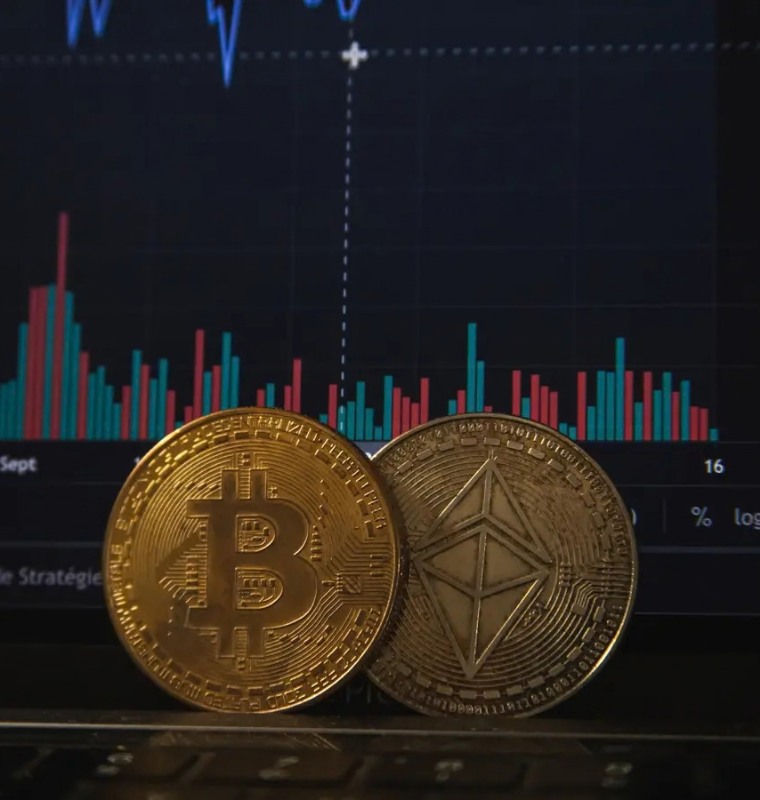
Bitcoin, the largest cryptocurrency by market capitalization, is currently holding near key support levels as global macroeconomic uncertainty continues to influence investor sentiment. Recent market fluctuations suggest that traders are balancing optimism about long-term adoption with caution amid unpredictable economic conditions. Analysts are closely monitoring Bitcoin’s price movements to assess whether current support levels will hold or if further volatility is likely.
Macro Factors Shaping Crypto Sentiment
Global economic conditions, including interest rate decisions, inflation trends, and geopolitical tensions, have a direct impact on the performance of cryptocurrency markets. Investors often view Bitcoin as a risk asset, and sudden shifts in macroeconomic indicators can trigger rapid buying or selling activity. As a result, Bitcoin’s price movements often mirror the broader sentiment in global financial markets.
Technical Indicators Signal Caution
Technical analysts note that Bitcoin is currently trading near historically significant support zones, which have previously acted as turning points during market corrections. Volume patterns, moving averages, and momentum indicators suggest cautious trading behavior, with investors waiting for confirmation of sustained market direction. Traders are watching key resistance levels closely, as breaking through these thresholds could trigger a renewed upward trend.
Institutional Involvement Remains a Stabilizing Factor
Despite short-term volatility, institutional participation in cryptocurrency markets continues to play a stabilizing role. Asset managers, hedge funds, and other large investors provide liquidity and long-term capital inflows, helping prevent extreme price swings. Many institutional players are focusing on strategic positioning in Bitcoin as part of diversified portfolios rather than engaging in speculative short-term trades.
Retail Activity and Market Psychology
Retail investors continue to influence Bitcoin’s price through social sentiment and trading platforms. Recent fluctuations have highlighted how collective psychology can amplify market moves, particularly during periods of uncertainty. As media coverage and online discussions shape perceptions, small-scale investors often react swiftly to market developments, creating additional short-term volatility.
Comparisons With Other Asset Classes
Bitcoin’s behavior is increasingly compared with traditional asset classes such as equities, gold, and bonds. While some investors continue to see Bitcoin as “digital gold,” providing a hedge against inflation, others view it as a high-risk speculative instrument. Correlation trends suggest that Bitcoin sometimes moves in tandem with broader risk-on or risk-off market sentiment, reinforcing the importance of macroeconomic conditions on crypto pricing.
Regulatory Environment Adds Complexity
Regulatory developments around the world continue to impact Bitcoin’s market performance. Governments introducing stricter rules or clarifying tax treatment influence both retail and institutional participation. Investors monitor regulatory announcements closely, as uncertainty can translate into rapid market adjustments, particularly in regions with large trading volumes.
The Role of Liquidity in Market Stability
Liquidity levels across major exchanges play a critical role in mitigating extreme price swings. Adequate liquidity allows large orders to be executed with minimal disruption to market pricing. During periods of macroeconomic stress, liquidity can tighten, increasing the potential for sharp price movements. Analysts recommend paying attention to order books and trading volumes to understand Bitcoin’s short-term market resilience.
Market Outlook and Investor Strategy
Market experts emphasize that Bitcoin’s near-term price movements are heavily influenced by macroeconomic events, technical support levels, and investor sentiment. Strategic investors often adopt a long-term perspective, viewing current volatility as a normal phase in a maturing market. Short-term traders may use technical patterns to capitalize on smaller fluctuations while preparing for potential shifts in global economic conditions.
Bitcoin’s Role in the Broader Crypto Ecosystem
As the flagship cryptocurrency, Bitcoin serves as a benchmark for the broader digital asset market. Its price movements often influence altcoins and related sectors, including decentralized finance and non-fungible token markets. Maintaining stability around key support levels is important not only for Bitcoin itself but also for the overall confidence in the cryptocurrency ecosystem.

Popular articles



Subscribe to unlock premium content
Disney’s Timeless Magic and How the Entertainment Giant Continues to Shape Culture and Innovation

Imran Khan’s Economic Missteps Amid Political Chaos in Pakistan

The Philippines’ Digital Shift How Remittances and BPO Are Fueling Growth

Disney’s Timeless Magic and How the Entertainment Giant Continues to Shape Culture and Innovation
Imran Khan’s Economic Missteps Amid Political Chaos in Pakistan
Disney’s Timeless Magic and How the Entertainment Giant Continues to Shape Culture and Innovation